
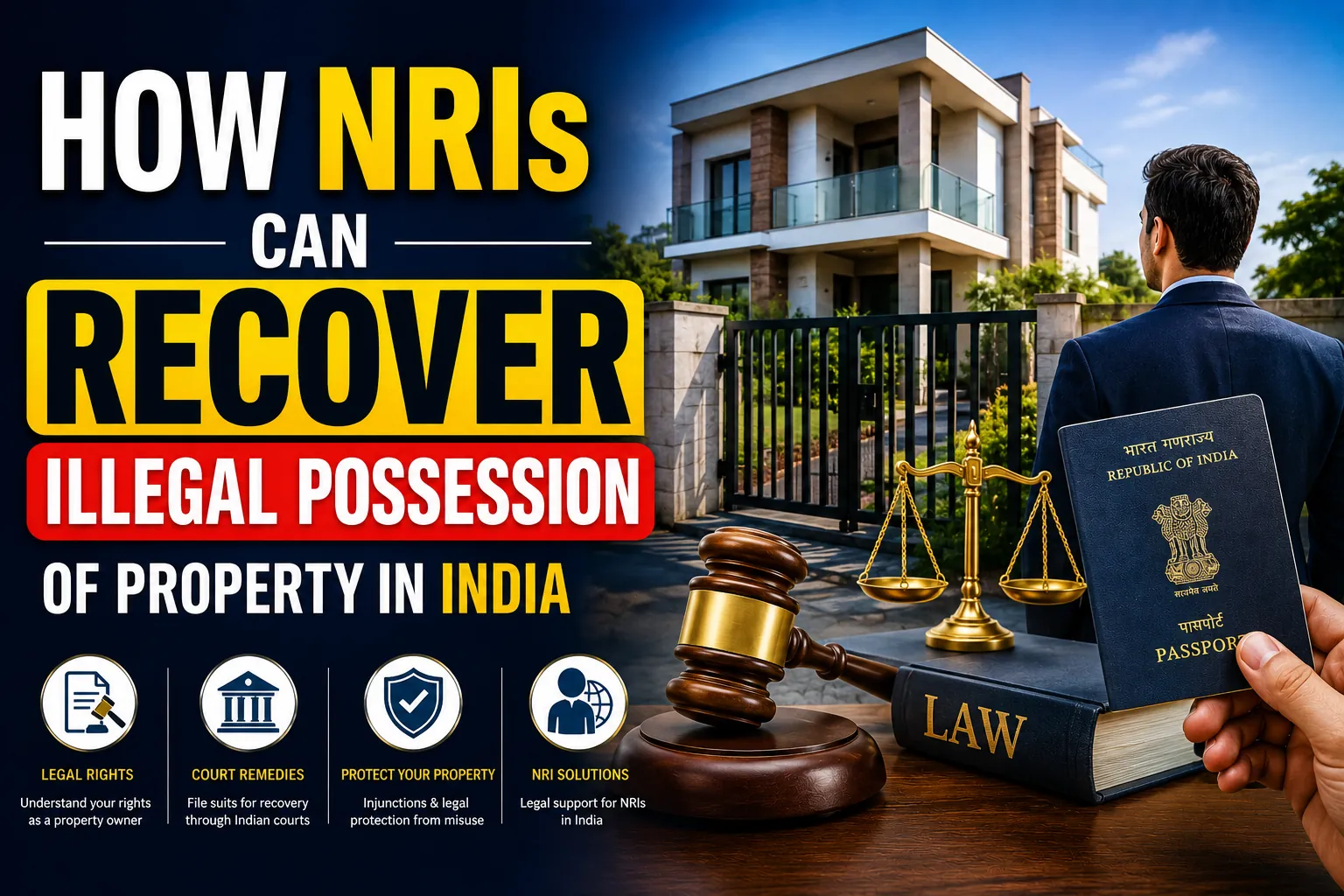
For many Non-Resident Indians (NRIs), owning property in India is more than a financial investment — it is an emotional connection to home. Unfortunately, one of the most common legal challenges NRIs face is discovering that their property has been illegally occupied, encroached upon, or taken over by relatives, tenants, caretakers, or third parties during their absence. With timely legal intervention and proper documentation, it is possible to reclaim ownership rights and prevent further losses.
Why NRI Properties Are Frequently Targeted
Properties owned by NRIs often remain vacant for extended periods, making them vulnerable to illegal occupation. Common scenarios include:
Relatives Refusing to Vacate
Relatives who were allowed temporary use of the property refuse to vacate, turning a goodwill arrangement into a prolonged legal dispute that requires formal intervention.
Unauthorized Occupation
Unauthorized occupants take possession of vacant NRI property during the owner's absence abroad, often making it difficult to reclaim without legal proceedings.
Tenant Overstaying
Tenants who continue to occupy the property after lease termination without legal authority create possession disputes that require civil court intervention to resolve.
Fraudulent Transfer
Fraudulent sale or transfer of NRI property through forged documents is one of the most serious forms of illegal possession, requiring both civil and criminal legal action.
First Steps: Verifying Property Status
Before initiating legal proceedings, it is important to establish the exact status of the property. A legal professional can assist in conducting the following:
A thorough examination of title documents to confirm rightful ownership and identify any unauthorized claims or transfers that may have taken place during your absence.
Reviewing revenue records, mutation entries, and municipal documentation to identify discrepancies, unauthorized changes, or encroachments on the property.
Checking all ownership documents including sale deeds, property tax receipts, and utility records to build a strong evidentiary foundation for recovery proceedings.
A thorough legal assessment of the occupation situation helps determine the most effective combination of civil, criminal, and injunction remedies for recovering possession.
Legal Remedies Available to NRIs
Indian law provides several effective remedies to help NRIs recover possession of their property. Knowing the available legal routes helps you choose the right approach based on the nature and severity of the dispute:
1. Send a Legal Notice
In many cases, the dispute can be resolved without lengthy litigation. A formal legal notice serves as the first step by establishing ownership rights, demanding vacation of the property, creating documentary evidence of the dispute, and providing an opportunity for settlement. Often, unauthorized occupants vacate the premises after receiving a properly drafted legal notice from an experienced property lawyer.
2. File a Suit for Recovery of Possession
If the occupant refuses to vacate, the property owner may file a civil suit for possession before the appropriate court. The court may order restoration of possession, removal of unauthorized occupants, compensation for unlawful use, and mesne profits as damages for illegal occupation. The success of such cases largely depends on documentary evidence and legal strategy.
3. Seek Injunction Orders
An injunction is a critical step to protect the property while litigation is ongoing. It can prevent the occupant from selling the property, creating third-party interests, making structural changes, or transferring possession to others. Obtaining an injunction early in the process safeguards the property from further damage or alienation.
4. Criminal Action in Cases of Fraud
Where illegal possession involves forged documents, cheating, criminal breach of trust, or fraud, criminal proceedings may also be initiated. Complaints may be filed for offences involving forgery, cheating, criminal trespass, criminal intimidation, and breach of trust. A combined civil and criminal strategy is often the most effective approach in serious cases.
5. Managing Matters Remotely via Power of Attorney
Many property disputes can be managed through a legally executed Power of Attorney, significantly reducing the need for repeated travel to India. An NRI can authorize a trusted family member or legal representative in India to sign documents, attend proceedings, communicate with authorities, and manage litigation on their behalf.
Documents Required for NRI Property Recovery
| Document Type | Purpose in Proceedings |
|---|---|
| Sale Deed / Title Deed | Primary document establishing legal ownership of the property and the basis for any recovery or possession suit filed in court |
| Mutation Records | Revenue records confirming the transfer of ownership in government records, used to verify and assert rightful title over the property |
| Property Tax Receipts | Evidence of continued ownership and financial responsibility for the property, supporting the rightful owner's claim in civil proceedings |
| Passport & NRI Status Documents | Required to establish the NRI status of the owner and support the context of the dispute, including absence from India and circumstances of occupation |
| Power of Attorney | Authorizes a trusted representative in India to act on behalf of the NRI in legal proceedings, document signing, and communication with authorities |
| Photographs & Evidence of Occupation | Visual and documentary evidence of illegal possession or encroachment, which strengthens the factual basis of the recovery case in court |
Common Mistakes NRIs Should Avoid
Many NRI property owners unknowingly weaken their legal position. Here are key mistakes that can complicate recovery and why timely legal support is essential:
-
Delaying Legal Action
Postponing action allows unauthorized occupants to establish stronger claims, making recovery more difficult and litigation more prolonged and expensive. -
Relying on Verbal Assurances
Informal promises to vacate carry no legal weight. Without written agreements or documented notices, enforcing rights in court becomes significantly harder. -
Handing Over Original Documents
Giving original property documents to caretakers, relatives, or tenants creates serious risk of fraudulent transfer or unauthorized dealings with the property. -
Allowing Informal Occupation
Permitting occupation without a formal written agreement gives the occupant grounds to claim rights over the property and complicates eviction proceedings later. -
Ignoring Suspicious Activity
Overlooking warning signs such as unauthorized construction, change in occupancy, or suspicious transactions can allow disputes to escalate beyond easy resolution.
How an Experienced NRI Property Lawyer Can Help
Recovering possession of property is rarely just about filing a case. It requires a strategic understanding of property law, documentation, court procedures, and dispute resolution. Here is how professional legal assistance can make a decisive difference:
Conclusion
Illegal possession of property is one of the most serious challenges faced by NRIs in India. However, property owners are not without remedies. Indian courts provide effective legal mechanisms to recover possession, protect ownership rights, and seek compensation where appropriate. The key is to act promptly — delays often complicate recovery and increase the risk of further disputes. For trusted legal assistance with NRI property matters in India, consulting Karan S. Thukral ensures that your rights are protected and your case is handled with the strategy and expertise it deserves.